 Posted by
Heroes’ Square, or Hősök tere, is one of Budapest’s main public spaces. At the end of Andrássy Avenue, it brings together the Millennium Monument, two major art institutions and the entrance to City Park. You can see the square without a ticket, then continue on foot to museums, gardens, the zoo or the Széchenyi Bath. This guide explains what the statues represent and how to plan a visit without mistaking the whole ensemble for a single monument built at one time.
- Hungarian name: Hősök tere.
- Location: northeastern end of Andrássy Avenue, beside City Park.
- Admission: the outdoor square is free; the adjacent museums charge separately for exhibitions.
- Transport: M1 metro, Hősök tere station.
- Allow: around 20–40 minutes for the square, more for museums and the park.
- Current caution: the Archangel Gabriel statue was removed for restoration; check its status before expecting the complete silhouette.
Why Heroes’ Square matters
Heroes’ Square is a ceremonial space devoted to figures and events in Hungarian history. The Millennium Monument originated in the commemoration of a thousand years since the Magyar conquest of the Carpathian Basin, traditionally dated to the late ninth century. Planning and building took decades; the present appearance reflects subsequent historical change as well as the original millennial idea. Visitors see a national narrative told in sculpture rather than a complete, neutral history lesson.
The square also sits at an important urban junction. Andrássy Avenue runs southwest towards the city, while the green paths of Városliget begin behind the colonnades. Together with Andrássy Avenue and the historic Millennium Underground, the square belongs to the Budapest UNESCO World Heritage listing. That designation covers a wider urban ensemble, not simply a separate ticketed “World Heritage site” at the monument itself.
For a first visit, approach along Andrássy Avenue if you can. The long sightline gives the monument a sense of scale. Arriving by the M1 metro is simpler when time is limited. Our metro guide and public transport guide explain tickets and transfers.
The Millennium Monument
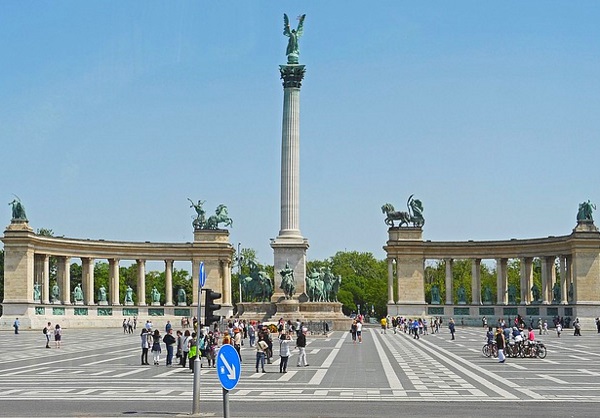
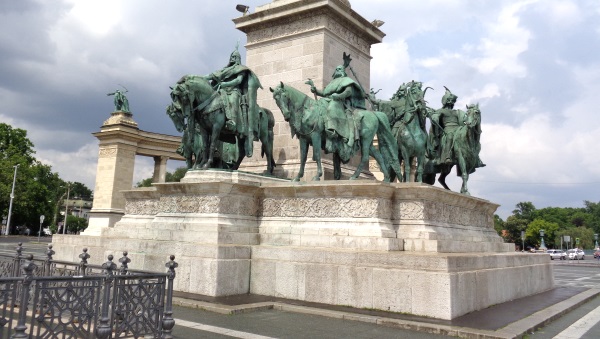
A tall column rises in the centre of the composition. Archangel Gabriel normally stands on top, holding the Holy Crown and an apostolic cross. At the base are mounted figures representing the seven Magyar chieftains. Two curved colonnades frame additional rulers and historical personalities. Look at each component separately: the column, horsemen, colonnades and sculptures communicate different periods of the national story.
Restoration can alter what you actually see. The Gabriel sculpture was removed from its column for extensive work, and the official City Park project has said that its return depends on structural assessment. Do not promise a fixed return date or use an old photograph as proof that it is back in place. The official restoration update is the place to check shortly before your visit.
The monument also includes a memorial element in front of the column. The square has served for major state commemorations and public gatherings. On event days, temporary barriers may restrict the usual walking route. Give yourself another way into the park if an official ceremony changes access.
Reading the statues carefully
Most tourists first recognise the central horsemen and the long lines of standing figures in the colonnades. The chieftains evoke the Magyar settlement; the standing statues represent later leaders. Rather than trying to memorise all names during a brief visit, read a few plaques, notice the periods represented and consider how a national monument selects particular people for public honour.
Budapest’s political history means that the monument’s interpretation and some figures have changed over time. A guided city walk or a museum visit can add context. A quick photograph cannot explain the debate over identity and statehood implied by the ensemble. Our Hungary highlights and UNESCO in Hungary pages place it within a wider trip.
The sculptures are best seen in daylight, when relief details are easier to distinguish. Morning or later afternoon can provide gentler light, but the exact photographic angle depends on season and weather. Avoid stepping into traffic or climbing on monuments for a clearer frame.
Museum of Fine Arts and Kunsthalle
Two imposing buildings face one another across the square. The Museum of Fine Arts (Szépművészeti Múzeum) stands on one side; Kunsthalle Budapest, or Műcsarnok, on the other. The former holds art collections and changing exhibitions. Kunsthalle focuses on temporary exhibitions rather than a conventional permanent collection of identical works every day. Verify the programme before choosing one.
It is easy to reverse the buildings when describing them as “left” and “right,” because the sides change with the direction you face. Use their names and a map. Museum tickets, opening times and exhibition access are separate from free entry to the outdoor square. If you want to see both, set aside much more than the time needed for the monument.
After the galleries, the City Park Visitor Centre and Museum of Ethnography provide another cultural option near the park edge. The City Park article covers its broader selection of sights.
Budapest walks and museum visits
Compare guided walks by their actual route. A tour that passes the square briefly is different from a detailed history visit; museum tickets may be extra.
Continue into City Park
The square is a logical entrance to Városliget. Walk behind the monument towards tree-lined paths, lawns, Vajdahunyad Castle and the park lake. The Széchenyi Bath, Budapest Zoo and newer cultural buildings can make this a full-day district rather than a brief roadside stop.
For families, pair the free square and park paths with one paid attraction instead of buying multiple tickets for the same afternoon. The zoo can occupy several hours; a bath visit needs its own preparation. The park itself has seasonal uses, including the ice rink near Vajdahunyad Castle in suitable winter conditions. Check current facilities before travel.
If you are interested in twentieth-century history, the House of Terror lies back along Andrássy Avenue. It is a separate museum and deals with difficult material; do not treat it as a minor photo stop on the way to a family attraction.
How to get there
The M1 underground line has a station named Hősök tere beside the square. This is particularly convenient from central Pest. Make sure your ticket is valid and correctly validated before entering the metro. Buses and trolleybuses offer other approaches depending on your starting address. A journey planner can account for temporary diversions better than a fixed route description.
Walking from the central parts of Pest along Andrássy Avenue lets you see its architecture, but it is longer than it appears when you still intend to visit the park afterward. Cyclists should observe marked routes and event restrictions. Parking near a major landmark can be inconvenient; most visitors do not need a car for this trip.
For arrivals from outside Budapest, use the airport guide or the Hungary arrival overview, then plan the final local leg. The square is not itself an airport transfer stop.
When to visit and how long to stay
The outdoor square is generally accessible as public space, but ceremonies and construction can restrict parts of it. You can see the main layout in twenty minutes; reading plaques, taking photographs and crossing to both museums can easily take longer. A half-day works well when you add a park walk and one nearby attraction.
Open paving makes the square exposed to summer sun and winter wind. Carry water in hot weather and use the park trees for a break. Rain changes the appeal of a long outdoor walk but makes the museums more attractive. For an evening visit, check transport back and remember that museums will have their own closing times.
Large groups occasionally occupy the centre for events. Do not infer from an online opening time for a museum that every point on the square will be freely accessible during an event. The monument itself is an outdoor landmark, not a museum with a ticket office.
Stay near the M1 or City Park
A hotel near an M1 stop makes it easy to combine Heroes’ Square with central Pest. Check evening routes and the actual walk to the property before booking.
A practical half-day route
Start with a metro ride to Hősök tere and view the whole square from the approach. Walk around the Millennium Monument and read the names that interest you. Choose either the Museum of Fine Arts or Kunsthalle if the current programme appeals; trying to see both in a hurry is rarely rewarding. Continue to the City Park lake and Vajdahunyad Castle, then finish at the bath, zoo or a café.
Alternatively, begin at the park early for a longer zoo visit and leave the square for late afternoon. This order may work better with children, whose energy for museum galleries is limited after several hours outdoors. Check which attraction has timed entry or an earlier closing time and build the day around that requirement.
On a broader Budapest trip, contrast this ceremonial landscape with the riverside around Parliament, the Chain Bridge and Buda Castle. Each tells a different part of the city’s story and needs its own travel time.
Understanding the setting
Budapest’s two banks offer very different visual landmarks. Heroes’ Square is on the Pest side, away from the Danube. It is therefore better paired geographically with Andrássy Avenue, the M1 railway and the park than with a quick riverside stroll. If you have only one afternoon, compare travel time carefully before combining the square with a timed ticket on Castle Hill. The route between these districts is straightforward by public transport, but they are not next door.
Andrássy Avenue itself is part of the experience. Its buildings, broad sections and more intimate stretches provide a useful introduction to Budapest’s nineteenth-century growth. The M1 line beneath it is historic, but its small platforms and carriages can feel crowded. Walking one direction and returning by metro is a practical combination when the weather suits you.
At the park end, paths diverge towards the bath, zoo, lake and newer museums. A park map or the City Park Visitor Centre can help if you are arranging a family visit. Distances across the park are meaningful, particularly after a museum visit or on a hot day. Identify the last stop you need for the journey home rather than automatically returning to the same M1 station.
Photography and respectful behaviour
The central column, colonnades and museum fronts create strong compositions from several angles. Wide photographs work from the Andrássy Avenue approach; details of the mounted figures need a closer position. The Gabriel restoration affects the classic skyline, and temporary works may appear in photographs. If that image is important to your trip, consult the latest official update first.
Heroes’ Square is also a place for remembrance and public ceremonies. Keep paths clear, do not climb on sculptures and give official events space. Drones and commercial photography can be subject to separate permissions. A public square does not mean every kind of filming or access is unrestricted.
Food, facilities and a realistic budget
You do not need to buy anything to see the monument, but a longer park visit can involve paid toilets, food, museum admission or a bath ticket. Restaurants and kiosks around major sights have different prices and hours. Compare menus before committing, and carry some water. If travelling with children, plan a simple break between the square and the next attraction rather than trying to eat only after several hours in the zoo.
For payments, Hungary uses the forint. Many places take cards, but small cash can still be useful. Our money guide covers ATMs and currency conversion. A museum ticket bought in advance may save a queue, but check whether it is for a permanent collection, a temporary exhibition or a timed visit. Keep the free square and paid sites separate in your budget.
Frequently asked questions
Is Heroes’ Square free?
Yes, visiting the outdoor public square normally costs nothing. The museums and other nearby attractions sell their own tickets.
Is Archangel Gabriel currently on the column?
The statue was removed for restoration. Check the official Liget Budapest update for its actual return before describing it as present during your visit.
Which metro stop should I use?
Hősök tere on the M1 line is beside the square. Other stops may be useful when you are walking through the park.
Can I combine it with City Park?
Yes. The park begins directly behind the square and offers several attractions; reserve at least half a day if you want more than a quick look.