 Posted by
Hungary has eight UNESCO World Heritage properties. They range from Budapest’s Danube riverfront and the wine cellars of Tokaj to an old village, a Benedictine abbey, caves and the open landscape of the Puszta. The number is useful, but a traveller needs more than a list of names: some places fit into a Budapest weekend, while others deserve a separate trip across the country. This guide explains what each designation covers, what you can actually visit and how to choose a sensible route.
At a glance: UNESCO sites in Hungary
- Number: eight World Heritage properties, according to UNESCO’s current Hungary list.
- Types: seven cultural properties and one natural property, the caves shared with Slovakia.
- Easiest first visit: the protected Danube banks, Castle Quarter and Andrássy Avenue in Budapest.
- Good longer trips: Hollókő, Pannonhalma, Pécs, Hortobágy, Tokaj, Fertő and Aggtelek.
- Before leaving: verify opening times and reservations with the individual operator; World Heritage status does not mean that every building, cellar or cave is open without a ticket.
What does UNESCO World Heritage mean in Hungary?
The World Heritage List recognises places considered to have outstanding universal value. In Hungary, a designation may cover an entire landscape rather than one ticketed building. Budapest’s listing includes several connected areas. Tokaj covers a historic wine-producing landscape. The Fertő landscape crosses the Austrian border, and the cave property is shared with Slovakia. That distinction matters when planning: a single pin on a map rarely tells you the full extent of a UNESCO property.
UNESCO lists eight Hungarian properties at present. Seven are classified as cultural and one as natural. Hortobágy is a cultural landscape because its long history of pastoral land use is central to the designation. It would be inaccurate to call all eight “natural wonders”, even though several contain striking scenery. UNESCO also maintains a separate tentative list of possible future nominations. A place on that list is not yet a World Heritage property.
You can see some protected areas for free, especially streets, viewpoints and landscapes. Museums, churches, abbey interiors, guided cave routes and visitor centres may charge admission. The protected name also does not guarantee that a particular feature is accessible on your dates. For current arrangements, use the relevant official visitor website before making a long journey.
All eight UNESCO World Heritage properties in Hungary
- Budapest, including the Banks of the Danube, the Buda Castle Quarter and Andrássy Avenue (1987; expanded in 2002).
- Old Village of Hollókő and its Surroundings (1987).
- Caves of Aggtelek Karst and Slovak Karst (1995; extended in 2000).
- Millenary Benedictine Abbey of Pannonhalma and its Natural Environment (1996).
- Hortobágy National Park – the Puszta (1999).
- Early Christian Necropolis of Pécs (Sopianae) (2000).
- Fertö / Neusiedlersee Cultural Landscape (2001).
- Tokaj Wine Region Historic Cultural Landscape (2002).
The years refer to inscription on UNESCO’s list, not the age of the monuments. The Budapest and cave properties were later extended. The order above broadly follows the first inscription dates, with the early Christian burial site placed before the Fertő landscape. The sections below focus on what visitors should expect on the ground.
1. Budapest: Danube banks, Castle Quarter and Andrássy Avenue
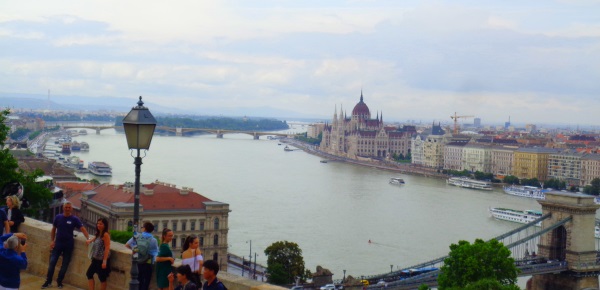
For most visitors, Budapest is the natural starting point. The UNESCO property links the historic riverfront with the Buda Castle Quarter and the broad Andrássy Avenue on the Pest side. It is a cityscape, not a single building. You can understand its scale by walking along the Danube, crossing one of the central bridges and looking back toward the Castle Hill. The setting includes important landmarks such as the Parliament and the historic buildings lining the river.
Begin near the Chain Bridge and explore the Buda Castle Quarter on foot. Allow time for the streets and viewpoints rather than rushing directly into one museum. On the opposite bank, the Hungarian Parliament is one of the most recognisable elements of the Danube panorama. Andrássy Avenue leads away from the centre toward Heroes’ Square, with the historic Millennium Underground running below part of the avenue.
A boat trip gives another perspective on the riverfront, but it is optional: you can see the essential setting from public promenades and bridges. Entry to individual museums, Parliament tours and other interiors follows separate rules. If you have only one day in Budapest, choose one Castle Quarter walk, one riverside walk and a trip along Andrássy Avenue; trying to enter every landmark would make the day unnecessarily hurried. Our Budapest sights guide helps you combine the larger city itinerary.
Budapest tours and Danube cruises
Guided walks and river cruises can help you understand the different parts of the World Heritage area. Compare the route, duration, departure point and cancellation terms before booking.
2. Hollókő: a preserved village in northern Hungary
Hollókő is a small Palóc village in Nógrád County, roughly 100 kilometres northeast of Budapest. Its protected old village preserves a traditional street pattern and vernacular houses. The experience is quite different from Budapest’s monumental architecture: the value lies in the relationship between settlement, buildings and surrounding rural landscape. It is a place to explore at walking pace, not a long checklist of attractions.
Walk through the village, look at the characteristic houses and leave time for the setting around them. Some buildings serve as small museums or workshops, while others have other uses; opening arrangements vary. The nearby castle is a separate attraction and can round out a visit, but check access and admission independently. Cultural events may make a visit livelier, yet they also bring more people and sometimes different opening rules.
Hollókő can work as a day trip from Budapest if you arrange transport carefully. A car gives more flexibility in this rural area. Public transport is possible but may involve infrequent connections, so check the return journey first. If you prefer a relaxed trip, combine it with an overnight stay in northern Hungary rather than trying to squeeze several distant sites into one day.
3. Aggtelek and Slovak Karst: the natural World Heritage property
The Caves of Aggtelek Karst and Slovak Karst form Hungary’s only natural property on the UNESCO list. The designation is cross-border; it is not confined to one cave or to Hungary alone. The karst region contains many cave systems and underground formations. For a visitor, the important practical point is that access usually means joining an authorised guided route, not wandering into caves independently.
Choose the cave and route that suit your available time and mobility. Routes can differ in length, stairs, temperature and physical demands. Bring a layer for the underground conditions even in summer, and wear shoes suitable for wet or uneven ground. Some tours have limited spaces or fixed departure times. Confirm the official programme, language options and meeting point before travelling, particularly outside the main season.
Aggtelek is a substantial journey from Budapest. It makes more sense as part of a northeastern Hungary trip than as a casual stop between city sights. Travellers with a car can link it with other destinations in the region, while those using buses should plan connections in advance. The UNESCO label describes a much wider system than any single visitor tour can show.
4. Pannonhalma: Benedictine abbey and landscape
The Millenary Benedictine Abbey of Pannonhalma and its Natural Environment is among Hungary’s most significant monastic sites. The Benedictine community was founded in 996, and the protected property brings together architecture, a long religious and intellectual history, and its hilltop surroundings. Visitors often come for the abbey buildings, views and the opportunity to understand how the site developed over many centuries.
Check which parts of the abbey are included in the available visitor route. Religious services, school activity and conservation work can affect access; a monastery is not simply a museum with every room open. The grounds and botanical setting give the visit a different rhythm from Budapest’s busiest landmarks. Allow enough time to see more than a single facade and read the interpretation provided on site.
Pannonhalma is near Győr in northwestern Hungary. It can fit into a route between Budapest and western Hungary or as a longer excursion from Győr. If travelling by public transport, check the final connection from the town or station to the abbey hill. If travelling by car, verify parking and the current visitor entrance before departure.
5. Hortobágy: the Puszta as a cultural landscape
Hortobágy National Park protects a broad landscape of plains and wetlands in eastern Hungary. UNESCO classifies it as cultural because traditional grazing and pastoral life shaped the landscape over a very long period. The open horizon may look simple at first glance, but the area is more varied than a postcard of grassland: wildlife habitats, settlements, bridges and long-established forms of land use all contribute to its character.
A good first visit begins with the village of Hortobágy and an official visitor centre or marked route. Guided programmes can offer more context on pastoral traditions and wildlife than an improvised drive across the plain. Access to sensitive habitats may be restricted; respect the marked paths and rules. Conditions change with the season, and exposed areas offer little shade in hot weather.
Hortobágy works particularly well if you are already visiting Debrecen or travelling through eastern Hungary. Our separate Hortobágy guide covers the destination, while the Puszta overview gives broader context. Do not assume that all organised horse shows represent the entire national park: the World Heritage landscape is larger and more complex.
6. Pécs: the early Christian necropolis
In the southern city of Pécs, the World Heritage property consists of an early Christian burial complex from the Roman town of Sopianae. Its underground burial chambers and decorated spaces are the reason for the UNESCO listing. This is a specific archaeological site, rather than a designation for all of Pécs or every church in its centre. Knowing that distinction helps you choose the right visitor entrance.
The necropolis is best explored through the visitor facilities that make the underground remains accessible and explain what you are seeing. Consider the route, stairs and exhibition layout before your visit if accessibility is important. Opening hours and ticket arrangements should be checked directly with the operator. The historical context is easier to follow if you allow time for the interpretation rather than treating the site as a quick photo stop.
Pécs has enough other sights to justify more than a hurried detour. Our Pécs travel guide can help you plan the rest of the city visit. For a traveller based in Budapest, Pécs is a distinct city trip; combining it on the same day with faraway Tokaj or Hortobágy would not be practical.
7. Fertő / Neusiedlersee: a landscape shared with Austria
The Fertő / Neusiedlersee Cultural Landscape extends across Hungary and Austria. The UNESCO designation recognises a long interaction between people and the lake environment, including settlement patterns, land use and cultural traditions. It is not a single lakeside attraction. The Hungarian side includes places that can be linked with a visit to Sopron and the surrounding region, while travellers may also explore the Austrian side on a cross-border itinerary.
Plan around what interests you: lakeside nature, villages, historic sites or a broader cycling trip. Check which routes and visitor facilities are open, as water conditions, protected habitats and conservation work can affect access. Some areas are best experienced with a local guide or on designated paths. A small section of shore cannot stand in for the entire cultural landscape.
For many international visitors, this property is a natural addition to a western Hungary journey rather than a quick Budapest excursion. If crossing the border, check your transport or bicycle route rather than assuming that the most direct line on a map is a public crossing or a suitable path.
8. Tokaj: historic wine region and cellar culture
The Tokaj Wine Region Historic Cultural Landscape lies in northeastern Hungary. UNESCO’s designation covers more than a glass of sweet wine: vineyards, settlements, cellars and centuries of wine-growing practice form a connected cultural landscape. Tokaj town is an accessible introduction, but the wider property includes many other villages and wine-producing areas.
Wine tastings and cellar visits need a little planning. Check whether a winery requires a reservation, which languages are available and whether the visit includes production areas, an underground cellar or only a tasting room. Travellers who do not drink wine can still enjoy the towns, landscape and historical context. Avoid driving after a tasting; choose a driver, local transport or an organised tour with suitable arrangements.
Our Tokaj guide provides a closer look at the town, while Hungary’s wine regions places it in a national context. Tokaj can be combined with other northeastern destinations, but distances make an overnight stay more comfortable than a rushed out-and-back trip from Budapest.
Where to stay in Hungary
For the Budapest World Heritage area, compare accommodation near a useful metro or tram connection rather than relying on the district name alone. For Pécs, Tokaj or other distant properties, an overnight stay can make the trip less rushed. Check the exact location, cancellation policy and travel dates before booking.
How to plan a World Heritage route
With two or three days, concentrate on Budapest. A city walk can connect the Danube banks, the Castle Quarter and Andrássy Avenue without long transfers. Add a museum or guided tour only if it fits your interests. This is the most efficient way to see one World Heritage property in depth rather than collecting eight names without understanding them.
With a week, choose a second region. Pannonhalma and Fertő fit a western route; Pécs works as a southern city break; Hortobágy and Tokaj belong on an eastern or northeastern itinerary. Hollókő can be paired with a northern Hungary trip, while Aggtelek deserves its own careful transport plan. These are planning groupings, not promises that every pair is close enough for a single day. Use current train and bus timetables for your exact date and check the last local connection.
Season matters. Summer offers long days but can be hot on open walks in Budapest or Hortobágy. Wine-region travel can be appealing in autumn, though harvest and special events can affect accommodation and tasting availability. Cave tours are an option in a wider range of seasons, but schedules may change. Rural attractions often have fewer departures and shorter hours outside peak periods.
Book only what needs booking. Streets and many viewpoints do not require a ticket. Cave tours, abbey interiors, archaeological visitor centres and selected guided visits may have timed access. Check official operator information first, then compare third-party tours if they add transport, a guide or flexibility you actually want. This keeps the trip practical and avoids paying for services you can easily arrange yourself.
World Heritage, tentative sites and other protected places
Hungary also has national parks, protected buildings and candidate sites that are not among these eight World Heritage properties. UNESCO’s tentative list is a preliminary inventory of places the country may consider nominating; it does not grant the same designation. The Balaton Uplands Cultural Landscape, for example, appears on that tentative list. Our Lake Balaton overview is useful for planning a lake holiday, but you should not describe the entire lake as a current World Heritage property.
Likewise, many famous Budapest attractions lie near or within the protected cityscape without having their own separate UNESCO inscription. The World Heritage property is the defined ensemble, not an individual badge for every museum or restaurant in the area. If a tour advertises a “UNESCO visit”, look at the actual route and what is included. UNESCO recognition describes heritage value; it is not an endorsement of a particular commercial tour.
Frequently asked questions
How many UNESCO World Heritage Sites does Hungary have?
UNESCO currently lists eight properties for Hungary: seven cultural and one natural. The cave property is shared with Slovakia, and the Fertő / Neusiedlersee cultural landscape is shared with Austria. The Budapest designation was expanded in 2002.
Which UNESCO site is easiest to see from Budapest?
The Budapest World Heritage area itself. Walk the central Danube banks, explore the Castle Quarter and follow part of Andrássy Avenue. You can see the urban landscape without buying a ticket, although individual interiors and guided tours may charge admission.
Is Lake Balaton a UNESCO World Heritage Site?
No. The Balaton Uplands Cultural Landscape is on Hungary’s tentative list, which is different from the inscribed World Heritage List. Hungary’s current eight properties are named above.
Are all eight sites free to visit?
No single rule applies. Public streets and some landscapes are freely accessible, while cave tours, museums, abbey interiors or exhibitions may require tickets. Always check the specific attraction and date.
Sources and further planning
The count, official names, classification and inscription years come from UNESCO’s Hungary country list. Individual UNESCO property pages explain the boundaries and significance in more detail. For prices, opening times and transport, use the current official site of each visitor attraction and the transport operator before departure. This article is a travel-planning overview, not a substitute for the operator’s daily information.