Posted by
Budapest’s Great Market Hall is both a working food market and a popular stop for visitors. The building stands at Fővám tér, close to Liberty Bridge and the southern end of Váci utca. You can walk in without an admission ticket, look at produce and Hungarian specialities, then decide whether to buy lunch or a souvenir. The experience is busiest in the middle of the day, and the hall is much more than a guaranteed cheap restaurant. This guide explains the layout, what to buy, how to get there and how to combine the visit with a walk through central Pest.
At a glance: Great Market Hall
- Also called: Central Market Hall or Nagyvásárcsarnok.
- Address: Vámház körút 1–3, beside Fővám tér.
- Admission: free; purchases and food are extra.
- Transport: M4 Fővám tér and several tram routes.
- Typical visit: 45–90 minutes, longer for a meal.
- Hours: verify on the operator’s website, especially Sundays and holidays.
Where is the Great Market Hall?
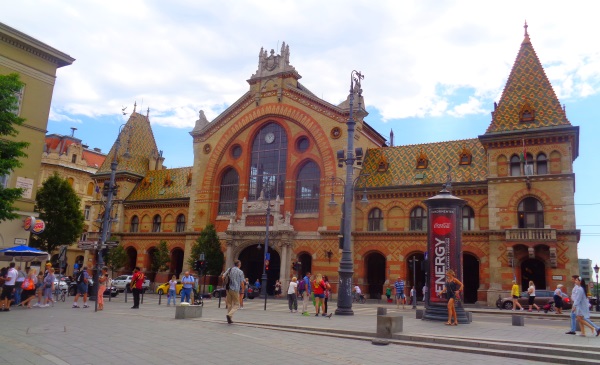
The hall occupies a prominent site on Vámház körút in Pest. The Danube and Liberty Bridge are nearby, and Váci utca leads north through the pedestrian shopping area. This makes the market a natural starting or finishing point for a walk. Our Budapest pedestrian area guide describes the route from Fővám tér to Vörösmarty tér.
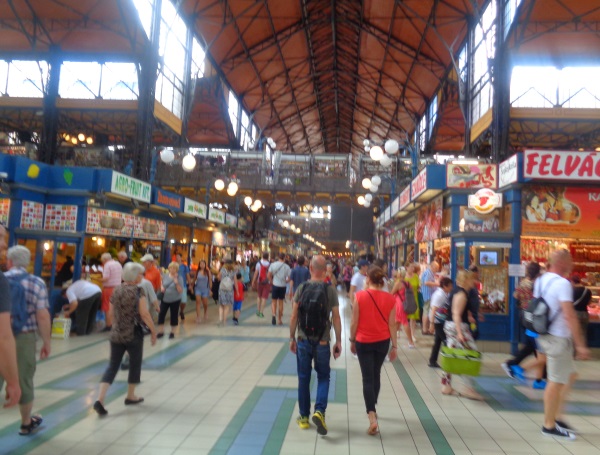
The nineteenth-century hall opened in 1897. Its iron structure, large roof and interior galleries give it a distinct appearance even if you do not plan to shop. It is a functioning market with tourist trade layered on top, so expect deliveries, local shoppers and food counters as well as cameras. Morning and midday feel different. A quiet early visit may offer more space to examine the stalls; lunch brings more customers to the upper-level counters.
Do not confuse it with every market carrying a “central” label in Budapest. Enter the full address or Fővám tér when planning a route. The official market operator’s information page is the most useful source for current hours and any holiday closure.
What is inside?
Ground floor: food stalls
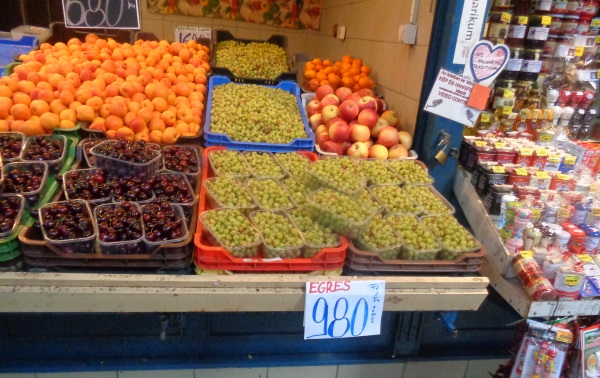
The main floor is associated with fruit, vegetables, meat, baked goods, paprika products and other groceries. Stalls vary in stock and opening hours. Some serve regular shoppers; others package products for visitors. Compare labels and prices before choosing a souvenir. Paprika can mean sweet, hot, smoked or prepared mixes; ask what you are buying if the label is unclear.
Hungarian cured meats, cheeses and sweets may interest travellers, but food import rules and luggage conditions matter if you are taking purchases across borders. A delicate pastry bought on the first day of a long trip may not travel well. For a gift, sealed products with clear ingredients and an expiry date are easier to handle than an unlabelled item. Our Hungarian food guide helps identify dishes and ingredients you may see.
Upper level: food counters and souvenirs
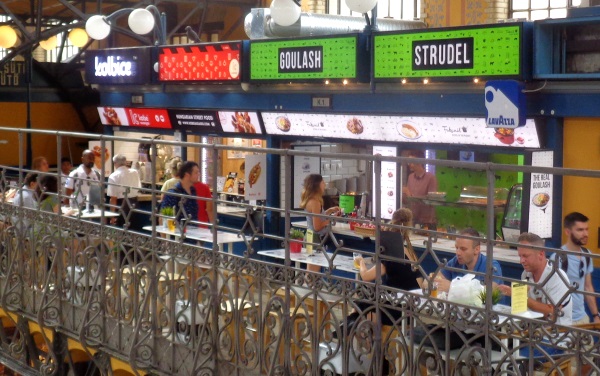
Upstairs you will find food counters and stalls aimed at visitors. The view down into the hall is worth a pause, and it helps you understand the building’s scale. You may see lángos, goulash and other Hungarian dishes, though individual menus change. Food here can be convenient after sightseeing, but the claim that a meal always costs less than a restaurant nearby is not dependable. Read the current menu and portion description before ordering.
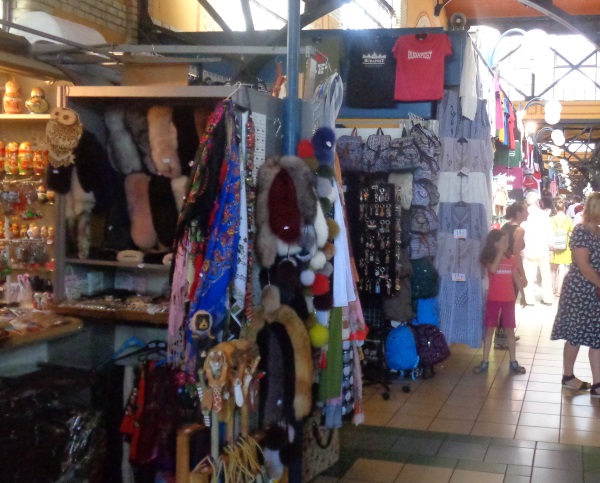
Souvenir choices can include textiles, embroidery, ceramics and inexpensive trinkets. Quality and origin vary. A seller near the entrance may charge differently from another upstairs. If you want an authentic craft item rather than a generic souvenir, inspect the maker and materials. There is no obligation to purchase simply because you are sightseeing in a market.
Lower areas and other facilities
Parts of the building below the main floor may contain additional vendors or facilities, but the mix can change. Check signs when you arrive instead of planning around a particular stall described years ago. Toilets and access facilities may have their own arrangements. If step-free access is essential, confirm current lifts and entrances before a trip.
What should you buy?
Paprika is the most obvious food souvenir, but it pays to choose by intended use. Ground sweet paprika for cooking differs from hot blends and decorative strings of dried peppers. Look for sealed packaging, origin information and a date. Hungarian wine is another option; our wine regions guide explains why Tokaj and other regions cannot be reduced to one bottle style. Check baggage rules for liquids if flying.
For an immediate snack, compare queues, visible preparation and the posted price. A busy counter may have fresh turnover but can be stressful at peak lunch. A visitor who wants a leisurely meal may prefer a restaurant away from the busiest gallery. For fresh produce, remember that sellers may offer different quality grades; ask before handling goods and keep small change or a payment card available.
Set a budget for souvenirs. Markets can be enjoyable without buying anything, and a short visit may be more rewarding than carrying heavy food through the city all day. If you are travelling onward by train, leave perishable purchases until the end of the day. The nearest station is not the same as a cool storage facility.
Stay close to central Pest
Hotels near Fővám tér or along the M4 line make the market and the river easy to reach. Compare the exact walking distance and public transport, especially with luggage.
Opening hours and the best time to visit
The operator currently lists weekday hours, a shorter Saturday and Sunday opening, with closures on public holidays. These arrangements are more useful than the old assumption that every Sunday is necessarily closed, but market schedules can change. Before a special journey, consult the official hours page and remember that individual stalls can close before the building.
A weekday morning is a good choice if you want to observe food shopping and have room to move. Around lunchtime the upstairs food area is more active. Saturday can be busy and shorter opening hours reduce flexibility. On a holiday, consider another activity rather than arriving to find the doors shut. The market is indoors, which makes it a useful rainy-day stop, though the walk to and from it is outdoors.
Allow 45 minutes if you want to see the architecture and browse briefly, or up to two hours if you compare products and have lunch. Avoid packing a reserved museum visit immediately afterward if the market is an important part of your day. Crowds and food queues are difficult to predict precisely.
How to get there
Take the M4 metro to Fővám tér or a tram that serves the square. If you arrive from Vörösmarty tér, walking down Váci utca is often more enjoyable than taking transport for this central stretch. The Budapest metro guide covers tickets and validation, while the public transport overview helps with the full network.
Liberty Bridge is immediately nearby, but it is a working bridge with traffic and trams. Use crossings and do not step into a roadway for a photograph. Visitors approaching by taxi can be dropped near the square subject to current traffic conditions. Driving into the city centre solely for the market is usually less convenient than public transport because parking and access are limited.
What to see nearby
From the market, walk towards the Danube for the view of Liberty Bridge and the Buda side. In the other direction, Váci utca links the hall to central Pest shops and squares. The Budapest sights overview helps choose a wider route. You can also continue toward the Chain Bridge by riverfront, though it is a longer walk than the few steps to Liberty Bridge.
A sensible half day might begin at the market when stalls are open, continue along the pedestrian street and finish at a riverside viewpoint. If you prefer food history, a guided market visit can provide context; check whether it includes tastings, an actual market stop and the language you need. Not every general Budapest food tour enters the hall.
Food tours and city walks
Compare the meeting point, tasting inclusions and whether a tour visits the Great Market Hall itself.
Practical tips
Look at posted prices before ordering and check whether the charge is per portion, weight or unit. A large display does not mean every item is available in a small amount. Ask for a receipt if needed. Some vendors accept cards, but payment methods may differ between stalls. A card plus access to forints is more flexible than assuming one method works everywhere.
The market is a tourist attraction, but it remains a place of business. Do not block a working aisle with a group or photograph a person close up without consent. Keep bags in sight in busy areas and consider a quieter time if you are travelling with a stroller. If you want photographs of the roof or interior galleries, pause where circulation allows rather than standing on a staircase.
Do not rely on old fixed euro prices for meals or souvenirs. Prices depend on exchange rates, vendors, portion size and season. The best comparison is a current menu and your own needs. The hall is free to enter, so you can decide whether it suits you before spending.
A simple plan for different visitors
Food-focused visit: arrive before the lunch rush, look around the main floor, choose a product you understand from its label and then compare the upstairs menus. Do not fill up immediately at the first counter if exploring the market is your reason to come. You can ask about ingredients if you have a dietary restriction, but do not assume that every vendor can prevent cross-contact in a busy food hall.
Architecture-focused visit: start outside to see the roofline and setting at Fővám tér, then walk the central aisle and look down from the upper gallery. The building’s scale makes more sense from both levels. A brief visit still gives you something worthwhile even when you do not buy souvenirs or wait for food.
Family visit: keep the route short and decide in advance whether to eat there. The busy aisles and queues can tire younger children. A quick browse, snack and walk towards the river may work better than a long shopping session. Strollers should use available accessible connections rather than being carried on a staircase through a crowd.
Budget visit: free entry means you can enjoy the building and spend only on a small item. Compare prices between stalls and nearby shops; a tourist-oriented market is not automatically cheaper than a supermarket. Carry water and keep enough time to find another lunch option if the counter prices do not suit you.
Frequently asked questions
Is Budapest’s Great Market Hall free?
Yes, there is no general admission charge to enter the hall. You pay for food, purchases or any separate guided service.
Is it open on Sunday?
The operator’s published schedule includes Sunday hours, but special dates and individual stalls can differ. Check the current official listing before travel.
Is it a good place for lunch?
It is convenient and has food counters, particularly upstairs. Compare menus and expect a busy tourist setting at peak times. For a quiet long meal, another restaurant may be preferable.
Can I combine it with a river walk?
Yes. The Danube and Liberty Bridge are close, and Váci utca leads north. If you want more historic context, see our Hungary highlights guide.