 Posted by
Central Budapest is unusually easy to explore on foot. The best-known pedestrian street is Váci utca in Pest, but a good walking day also includes Vörösmarty tér, the Danube promenade, the streets around St Stephen’s Basilica and the Great Market Hall. These places form a useful route rather than one continuous pedestrian-only zone. This guide explains where to start, what to see, how to reach the area and which nearby sights are worth a detour.
At a glance: walking in central Budapest
- Main street: Váci utca, between the Vörösmarty tér area and Fővám tér.
- Best starting points: Vörösmarty tér (M1) or Fővám tér (M4).
- Nearby: Great Market Hall, Danube promenade, Elisabeth Bridge and the centre of Pest.
- Allow: about one to two hours for the direct walk, longer for shops, food and riverside stops.
- Costs: the streets are free to visit; transport, museums, meals and tours are separate.
Where is Budapest’s main pedestrian area?
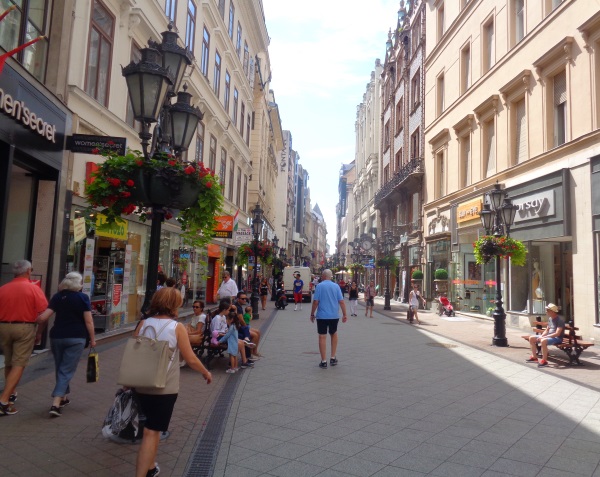
Váci utca runs through the historic centre of Pest, roughly parallel to the Danube. Its northern end is close to Vörösmarty tér and the southern end leads towards Fővám tér and the Great Market Hall. Do not confuse this shopping street with Váci út, a much longer road elsewhere in the city. On a map, look for the accent in Váci and the word utca, meaning street.
The phrase “Budapest pedestrian zone” can be misleading. The city has several pedestrian streets and squares rather than a single enclosed district. You can leave Váci utca for smaller side streets, walk towards the river or continue into the streets around Deák Ferenc tér and St Stephen’s Basilica. Crossings between these areas may involve ordinary roads, trams and traffic lights. Keep an eye on the route, especially when travelling with children.
The centre is divided by the Danube. Váci utca is on the Pest side, the flatter eastern bank. Buda Castle is across the river. If you want to see both in one day, the walk can connect naturally with a bridge crossing. Our Budapest sights overview helps you arrange the wider itinerary.
A practical walk from Vörösmarty tér to the Great Market Hall
Start at Vörösmarty tér
Vörösmarty tér is a convenient meeting point and the terminus of the historic M1 metro line. From here you can begin on the northern section of Váci utca. The surrounding blocks contain shops, cafés and routes to the Danube promenade. If you arrive by other metro lines, change at Deák Ferenc tér and either take M1 one stop or walk. The Budapest metro guide explains the lines and ticket rules.
Before setting off, decide whether your priority is shopping or sightseeing. The street is straightforward to follow, but a little time on the riverside often gives a better sense of the city than remaining among shopfronts throughout. Several passages and side streets connect the route to the embankment. The river-facing walk offers views towards Buda and the hills beyond it.
Continue along Váci utca
Váci utca is a popular retail street, with international chains, local shops, restaurants and cafés. Its character varies between the busier northern part and the southern blocks. There are also historic façades to notice above street level. Shops change frequently, so a list of individual tenants dates quickly; use the walk for its location rather than for any one store.
Tourist-centre restaurants can be convenient, but the most prominent terrace is not automatically the best value. Read the menu, check whether service is included and look at recent reviews before sitting down. For a quicker lunch, side streets and the surrounding district offer alternatives. The guide to Hungarian dishes explains local foods worth trying without assuming that every restaurant on Váci utca serves them well.
Finish near Fővám tér
At the southern end, the Great Market Hall is the most useful landmark. Its covered stalls and food counters make a natural stop, although market opening hours can differ from those of the surrounding shops and some traders close earlier. Check the current hours before planning a late visit. The market itself can be explored without treating it as a complete substitute for a meal elsewhere. Our Great Market Hall guide has more on the building and what to expect inside.
Fővám tér has an M4 metro station and tram connections. The square is also near Liberty Bridge. If you still have energy, walk towards the bridge for a different view of the Danube; remember that the bridge is a transport route with trams and traffic, not simply a pedestrian promenade. This is a good point either to return to your accommodation or continue towards Buda.
Stay in central Budapest
A hotel near Deák Ferenc tér, Vörösmarty tér or the inner Pest riverfront makes Váci utca and many other sights easy to reach on foot. Compare the location on a map as well as the room price.
What else can you see nearby?
The Danube promenade
The Pest embankment is only a short detour west of Váci utca. It offers long views of the Buda side, particularly around the Castle District. The most pleasant sections depend on construction and riverfront traffic, so use marked crossings and stay on the public walkway. A short walk by the water works well if you want a break from shopping.
The river links many of Budapest’s major landmarks. To the north, the Chain Bridge is one of the best-known crossings. Farther north you can reach the Hungarian Parliament and the Shoes on the Danube Bank memorial. The memorial is a place of remembrance; allow time to read about its history rather than treating it as another photo backdrop.
Inner Pest squares and streets
The blocks around Váci utca contain smaller lanes, courtyards and squares. A short detour can be worthwhile even if you do not plan to shop. The area around St Stephen’s Basilica is another walking destination north of the main route. The basilica guide covers the church and visitor considerations. These extra streets are a useful option when a riverside wind or summer heat makes a straight promenade walk less appealing.
Crossing into Buda
From the centre of Pest you can reach the Buda side by bridge or public transport. The Castle Quarter is uphill; walking all the way involves more time and effort than a flat stroll along Váci utca. Plan a separate half day if you want to see the castle area properly. Our Buda Castle guide can help with that part of the trip. Travellers with limited mobility should check accessible routes and current transport before setting off.
Shopping, food and practical expectations
Váci utca is convenient for familiar shops and window shopping, but it is not a specialist market for Hungarian crafts. Souvenirs sold in a busy tourist street vary in origin and quality. Compare prices and inspect labels if buying paprika, wine or handmade goods. Food bought at the market or in a grocery store may suit a tighter budget. Card payment is widespread in central Budapest, though it is sensible to have access to some Hungarian forints for small purchases.
There is no entry fee and no fixed visiting time for the street. Individual shops, the Market Hall and cultural sights keep their own hours. Sunday opening may differ from a weekday, and public holidays can affect both shopping and transport. Verify a particular business if your trip depends on it. Public toilets are not guaranteed at every block; cafés, the market and transport hubs may offer facilities subject to their own rules.
The route is largely level, which makes it easier than Buda’s hill streets. Cobblestones, delivery vehicles, busy crossings and temporary works can still affect accessibility. If you are using a wheelchair or have trouble walking, consult current station accessibility information before choosing a metro stop. The public transport overview gives the wider network context.
See Budapest beyond the shopping street
A guided city walk or Danube cruise can add historical context and river views to a day in central Pest. Compare the route, language, duration and meeting point before reserving.
Getting there and getting around
The simplest approach from elsewhere in Budapest is public transport. M1 ends at Vörösmarty tér; M4 serves Fővám tér. Deák Ferenc tér, a major transfer station, is within walking distance of the northern part. Tram and bus routes offer alternatives, particularly if you are arriving from a riverfront stop. Use the official BKK journey planner or BudapestGO for current services and disruptions rather than relying on an old route description.
If you use a paper single ticket on the metro, validate it at the station entrance before entering the paid area. BKK’s current ticket instructions explain when transfers between metro lines are permitted. Other ticket types, digital validation and bank-card payment have their own rules; check the ticket that you actually buy. Do not assume that any contactless bank card held near a vehicle door has paid a fare. The official BKK visitor ticket guide is the best place for current details.
Driving to Váci utca itself is rarely helpful. Central streets include restricted-access sections and parking is limited and often paid. If you are staying outside the centre, leave the car where parking is permitted and use the metro or tram for the last part. Taxis can drop you near an accessible edge of the pedestrian area, but the exact point depends on local traffic arrangements.
When is the best time to walk here?
Morning is useful if you want photographs and a relatively calm stroll; shops may only be opening. The middle of the day suits the Market Hall and lunch, but Váci utca can feel busy. In summer, take water and pause in shade, especially if you combine the walk with the exposed riverfront. In winter, shorter daylight means you may prefer to visit the market and major sights first, then return for evening lights.
Allow flexibility for rain. A covered market or museum can provide a stop, yet the overall route is outdoors. Budapest is enjoyable on foot in more than one season, but the best order depends on your own interests. Someone focused on architecture might spend little time in shops and continue towards the river. A visitor arriving by train with luggage may prefer to leave bags at accommodation before tackling a busy central street.
Suggested walking plans
One easy hour
Take M1 to Vörösmarty tér, walk down Váci utca without major detours and finish outside the Great Market Hall. This gives a basic feel for Pest’s central pedestrian street. If the market is closed, the building is still a useful landmark, but you will miss the stalls. Return by M4 from Fővám tér or continue by tram.
Half a day in central Pest
Start at Vörösmarty tér, explore Váci utca, enter the Market Hall when open and walk back along part of the Danube. Add St Stephen’s Basilica or another nearby sight according to your interests. This gives more variety than spending the whole half day in shops. Keep an eye on walking distance: even compact central Budapest grows tiring when you include several riverfront detours.
A full sightseeing day
Pair the Pest walking route with the Chain Bridge, the Parliament area or Buda Castle. Choose just one major additional district if you want time for a museum or guided visit. A city tour can be useful for first-time visitors, but check whether it actually stops near the places you want to explore on foot; many sightseeing vehicles cannot enter pedestrian streets.
Frequently asked questions
Is Váci utca the same as Váci út?
No. Váci utca is the central shopping and walking street described here. Váci út is a much longer road extending north from the centre. Enter the full address or the nearby Vörösmarty tér or Fővám tér stop into a map to avoid a wrong destination.
Is the area safe for walking?
The central pedestrian streets are well travelled. Use ordinary city precautions: watch bags in crowds, look both ways at crossings and check a restaurant menu before ordering. There is no need to avoid the area, but pedestrian status does not mean every side street is free of vehicles.
Can I see the whole route with a stroller?
The core Pest walk is mostly level. Crowds, surfaces and temporary work may make some sections less convenient. A compact route from one metro stop to the other is usually simpler than adding bridge crossings and Buda’s steep streets.
Do I need to book anything?
No booking is required to walk along Váci utca or the promenade. Reserve only a specific tour, restaurant or ticketed sight when it fits your plans, and check its cancellation terms. For general trip planning, our Hungary sights guide places Budapest in the wider country itinerary.