 Posted by
The Dohány Street Synagogue is one of Budapest’s most significant buildings and an active place of Jewish heritage. Its richly decorated interior attracts visitors, but the visit also leads to a cemetery and memorials that speak to the destruction of Jewish life during the Holocaust. Allow time for both the architecture and the history.
At a glance
- Location: Dohány Street in central Pest, near Astoria.
- Best for: Architecture, Jewish history and a thoughtful visit to the memorial courtyard.
- Allow: About 90 minutes or longer if you visit the museum and join a tour.
- Check first: The complex is normally closed to tourists on Saturdays and Jewish holidays; hours vary seasonally.
Why visit the Great Synagogue?
Built in the mid-nineteenth century, the Great Synagogue presents an unusually monumental face to the street. Its twin towers and ornate interior reflect the aspirations of a large urban congregation. The building is often described as Europe’s largest synagogue, though the exact ranking depends on whether one compares seating or floor area. Its significance is not a contest of size. It stands at the centre of a living community and of an essential, painful part of Budapest’s story.
A visitor ticket generally gives access to several parts of the complex, although the exact inclusions can change. Rather than treating it as one quick photograph, plan a route through the prayer hall, the Jewish Museum if open, the cemetery and the Raoul Wallenberg Memorial Park. On a guided visit, you can better understand how the building was used and what happened to the surrounding neighbourhood.

The building and its interior
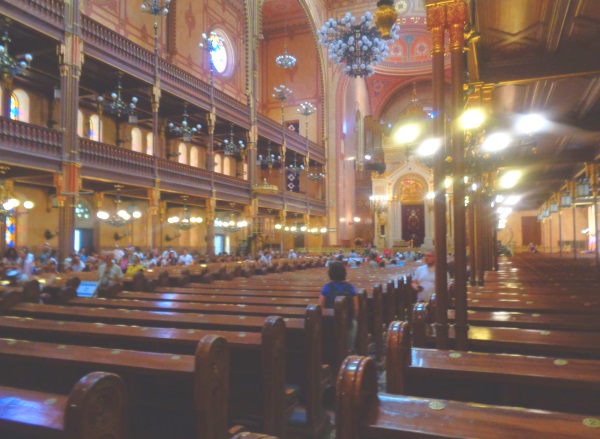
The synagogue was completed in the 1850s. Its Moorish Revival details, warm brickwork and decorative patterning distinguish it from nearby apartment blocks. Inside, rows of seats face an impressive ceremonial space. Looking carefully at the interior reveals how nineteenth-century Budapest’s Jewish community expressed identity in a rapidly growing capital.
It remains a religious site. Some areas can be inaccessible during services or special events; visitor routes and behaviour are governed by the community. Modest dress is appropriate, and men may be asked to wear a head covering supplied at the entrance. Follow on-site instructions about photographs and quiet conduct. These small courtesies matter more here than getting an empty-room picture.
Courtyard, cemetery and memorials
The cemetery beside the synagogue is unusual: Jewish burial grounds are generally separate from prayer buildings. It exists because the area became part of the Budapest ghetto during the Second World War. People who died there were buried in the courtyard in terrible circumstances. Move through this space slowly and respectfully. It is not just another stop on a sightseeing circuit.
In the Raoul Wallenberg Memorial Park, the Tree of Life memorial recalls people murdered in the Holocaust. Names appear on its metal leaves. The memorial also recognizes those who helped save lives. A visit here can connect the broad historical accounts in museums with individuals and families who lived in Budapest. Our guide to the Shoes on the Danube Bank memorial describes another important place of remembrance in the city.

The Jewish Museum and wider neighbourhood
The Hungarian Jewish Museum, associated with the complex, adds objects and interpretation to what you see in the synagogue. Exhibition arrangements change, so check what is included on your date. Just outside, the streets of the historic Jewish Quarter contain further synagogues, restaurants and traces of nineteenth-century development. Today the district is also known for nightlife; its lively present can obscure its older layers unless you make time to look.
For a broader historical itinerary, pair this visit with the House of Terror on a different part of the day, keeping in mind that each institution addresses distinct events and experiences. You can also visit Parliament and walk the Danube embankment. Give yourself pauses between memorial sites rather than racing through them.
Tickets, tours and visiting hours
Check the synagogue’s visitor information or its current ticketing provider for the exact hours, holiday closures, tour languages and admission. Saturday closure follows the Jewish Sabbath; other religious dates can also affect entry. Last admission may be well before closing, so verify this before making afternoon plans. A guided tour is particularly worthwhile if you want context for the architecture and memorial spaces.
Guided visits in Budapest
Compare available synagogue tours and city history walks, including language, meeting place and what the ticket covers. Verify current opening on the venue’s own site.
Morning and early afternoon visits are often easier to fit into a day than arriving near last admission. During peak periods, allow for security and ticket queues. Carry an ID if a ticket category or discount requires it. The official rules are the final authority on bags, dress and photography; third-party descriptions can lag behind changes.
Getting there
The synagogue is in central Pest. Astoria on metro line M2 is a convenient nearby stop; buses and trams serve the surrounding streets. It is also walkable from Deák Ferenc tér and many central hotels. For routes and ticketing, see our Budapest public transport guide and metro guide. Parking in the centre is seldom the easiest approach.
A sensible walking route continues toward the St Stephen’s Basilica, the Danube or the Great Market Hall, depending on your interests. If you are new to the city, our Budapest sights overview helps place the visit in a wider plan.
Where to stay in Budapest
A central Pest hotel makes the synagogue and many other landmarks easy to reach on foot or by metro. Compare the location and cancellation terms carefully.
A respectful way to visit
There is room to admire craftsmanship while recognizing why the memorials exist. Avoid treating the cemetery as a backdrop for poses, and keep voices low where others are reflecting. If travelling with children, explain in age-appropriate language what the memorial commemorates before entering the courtyard. On a busy day, taking a guided tour or reading the interpretive information can make a much more meaningful visit than simply following the crowd.
History behind the visit
The synagogue opened during a period when Pest was growing rapidly and its Jewish community was deeply involved in the city’s commercial and cultural life. The building’s scale speaks to that community’s confidence. A visit today inevitably encounters the rupture of the Second World War. The surrounding streets became part of the wartime ghetto, and the cemetery and memorials inside the complex make that history immediate. Understanding both periods keeps the building from becoming either an architectural curiosity or a memorial without context.
The Jewish Quarter is not a museum preserved at one date. It has changed repeatedly, including after the war and in the recent growth of tourism. Look at street-level details and seek out interpretation from the community or a knowledgeable guide. If you join a walking tour, check that it covers Jewish life as well as the Holocaust and that it treats living religious sites respectfully.
How to organize a visit
Start by checking the religious calendar, then choose a morning or early afternoon entry. Look for the exact entrance and security instructions on the current ticket. A prebooked tour may specify a meeting point outside the complex. If you want to see another synagogue nearby, verify its independent opening and admission rather than assuming one ticket covers every site in the neighbourhood.
The grounds and museum invite different speeds. Spend time viewing the prayer hall and reading its interpretation, then approach the cemetery and Tree of Life without rushing. Afterwards, a walk through the district can help place the complex in the surrounding urban fabric. Avoid planning a long list of memorials back to back; a pause allows room to absorb what you have seen.
Accessibility and family visits
If step-free access, seating or another accommodation matters to you, contact the venue before buying a timed ticket. Historic buildings and security routes can limit some paths. Families can prepare younger visitors by explaining that the courtyard remembers people who were killed. Keep the language honest and appropriate to their age, and give them the option to ask questions afterwards.
For photographs, follow current signs and staff instructions; rules can differ between the prayer space and memorial areas. Even where a camera is permitted, respect worshippers and mourners. The best outcome of a visit is a clearer understanding of people and history, not a complete gallery of images.
Frequently asked questions
Is the synagogue open on Saturday?
Tourist visits are normally unavailable on the Jewish Sabbath. Check the official calendar for your exact travel date and for religious holidays.
How long should I allow?
At least 60–90 minutes; allow longer for a guided tour, the museum and unhurried time in the memorial spaces.
Can I buy a ticket at the entrance?
Admission arrangements and capacity vary. Advance booking may help in busy periods, but confirm the terms and opening hours before paying.
Is this only an architectural attraction?
No. It is a religious building and a site of Holocaust remembrance. The courtyard, cemetery and memorial park are central to understanding the visit.