Posted by
The Széchenyi Chain Bridge is one of Budapest’s most recognisable landmarks and a useful walking link between Pest and Buda. Opened in 1849, it made a permanent connection across the Danube before the separate towns were formally united as Budapest in 1873. Today visitors can cross on the pavements, look towards the Castle Quarter and Parliament, and continue to the sights on either bank. This guide covers the bridge’s history, current traffic arrangement and an easy walking route.
At a glance: Budapest Chain Bridge
- Hungarian name: Széchenyi Lánchíd.
- Opened: 1849; reconstructed after wartime destruction and reopened in 1949.
- Crossing: pedestrian pavements are open; the roadway is restricted to permitted traffic.
- Cost: walking across is free.
- Best combination: Pest riverfront, bridge crossing and Buda Castle Quarter.
- Before visiting: check current BKK notices for occasional event or maintenance closures.
Why is the Chain Bridge important?
The bridge provided a permanent crossing between Buda and Pest at a time when crossing the Danube depended on less reliable arrangements. Count István Széchenyi promoted the project, and the resulting structure became a symbol of modernisation. Its full Hungarian name honours him. The bridge does not itself mark the date when Budapest was founded: Buda, Pest and Óbuda were formally unified in 1873, more than two decades after the 1849 opening.
The location is central to its appeal. From the Pest end you look towards the hills and Buda Castle; from the Buda end you see the built-up Pest riverfront. The Danube banks and Castle Quarter are part of Budapest’s UNESCO World Heritage property. Our UNESCO guide to Hungary explains what the designation includes rather than treating every individual bridge as a separate listing.
For a first visit, the bridge is worth crossing on foot. It takes only a short time without stops, but most travellers pause for photographs and to orient themselves. Do not block the narrow pavement to set up a long photo session. The roadway carries permitted vehicles and bicycles; pedestrians should remain on the designated pavement and use crossings at the bridgeheads.
A brief history of the Széchenyi Chain Bridge
Construction in the nineteenth century
Planning and construction took place in the first half of the nineteenth century, and the bridge opened in 1849. It was the first permanent bridge across the Danube between Buda and Pest. Its chain-supported structure and stone towers were striking achievements for the period. The name “Chain Bridge” refers to the suspension chains, not to a chain laid across the river.
The project belongs to the history of a rapidly changing city. New transport links, institutions and public buildings helped draw the two banks together. The bridge was an important step, but the later administrative union also included Óbuda. A visitor who remembers only “the bridge united the cities in 1849” misses the distinction between a physical connection and the formal municipal merger.
War damage and rebuilding
Budapest’s Danube bridges were destroyed during the Second World War. The Chain Bridge was rebuilt and reopened in 1949, exactly a century after its original opening. The structure visitors see today is therefore not wholly the 1849 bridge, even though its historic form and symbolism remain. Earlier twentieth-century alterations and later maintenance also form part of its history.
A major modern renovation was completed in 2023. The pedestrian pavements reopened as part of that work. Present-day materials and safety systems are a reminder that keeping a historic bridge in use requires substantial engineering. If you are interested in the wider set of crossings, see our Budapest Danube bridges guide.
What to notice in the bridge’s design
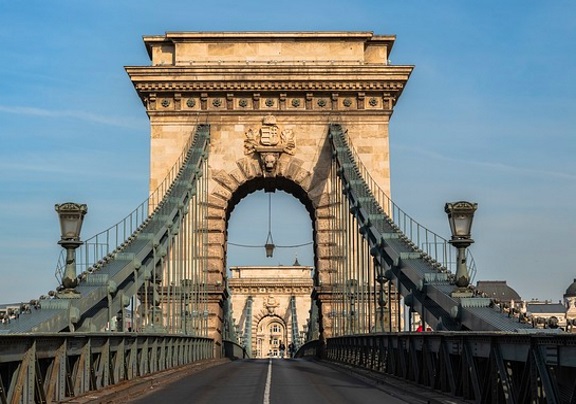
The bridge is a suspension structure with large stone towers, chains and a deck stretching across the river. When standing on a pavement, you can appreciate how the chains rise and fall between the towers and anchorages. The repeated structural elements make it visually different from the later Budapest bridges. It is an engineering landmark as well as a useful route, which helps explain why it appears so often in images of the city.
The lion sculptures at the bridge entrances are another familiar detail. They were added after the bridge opened. A long-running story claims that the sculptor forgot to give the lions tongues; it is better treated as a local legend than as a reliable account of the design. Look at the bridge in its wider setting too: the Pest side leads into the city’s built-up centre, while the Buda side sits below a steep historic district.
Do not expect the viewpoint from a moving bus to match a walk. On foot you can stop briefly and change sides only via the bridgeheads, where safe crossings are provided. A river cruise sees the towers and span from below, while Castle Hill shows the crossing as one part of the urban landscape. Each vantage point tells a different story about how the bridge connects the city.
When to visit and how much time to allow
Early morning often offers a quieter crossing and softer light. Midday is convenient when linking other sights, but can be crowded in the warm season. Late afternoon may give attractive light on one side and leave time for a riverside meal; the direction of the sun changes with season. In winter, wind over the Danube can feel colder than the air temperature in sheltered streets. In summer, the bridge has little shade. Dress for the exposed crossing rather than for an indoor museum.
Allow roughly 20 to 40 minutes if you simply want to approach, cross and take a few photographs. Add at least another hour if you continue up Castle Hill, and more if you enter a museum or church. A short bridge crossing can become a substantial sightseeing route once you include the climb, riverfront detours and return transport. If time is limited, choose the view or district that matters most to you.
The bridge is part of everyday city movement, so pedestrian etiquette matters. Keep the passage clear for people commuting, avoid stopping in a narrow group, and do not step into the road for a photograph. From either bridgehead you can find safer spaces to pause. This helps everyone enjoy a structure that is simultaneously a monument and working infrastructure.
Can you walk, cycle or drive across?
Yes, pedestrians can use the pavements, normally free of charge. The current roadway arrangement favours public transport and certain permitted vehicles rather than ordinary private-car through traffic. BKK’s published traffic decision allows buses, taxis, motorcycles, bicycles, scooters and emergency vehicles under its rules. Because traffic orders can change for events or works, drivers and cyclists should check current signs and BKK notices. Do not infer driving permission from an old photograph.
For pedestrians, the most important point is to keep to the pavement. Cyclists use the roadway under the applicable traffic rules, not a shared sightseeing walkway. Cross carefully at the junctions at either end. The bridge can feel windy or exposed in bad weather, so a riverside walk may be more comfortable on a calm day.
If you have limited mobility, note that the bridge itself is relatively level, but connecting paths, crossings and the climb to Castle Hill can be more demanding. Check a route for the entire journey, not merely for the bridge span. The Budapest public transport guide helps with alternatives to the hill climb.
Stay near the Danube
A hotel in central Pest or near the Buda bridgehead can make an early or evening walk across the Chain Bridge easy. Check the actual walking route and public transport connections.
Where are the best views?
From the bridge pavements
A crossing gives a sequence of river views rather than one fixed postcard angle. Face north for the Parliament direction and south for other central bridges; look back towards each bank as you progress. The best side depends on the time of day, light and the view you want. The stone towers frame photographs, but keep moving if the walkway is crowded.
From the Pest embankment
The riverfront near the Pest bridgehead lets you see the full bridge with Castle Hill rising behind it. This viewpoint works well before you cross. Continue along the embankment for a different angle and to connect with other sights. The central Pest walking guide describes how to link the river with Váci utca and the Market Hall.
From Buda and Castle Hill
From the Buda end, views of the bridge and Pest open up as you move towards the Castle Quarter. Higher viewpoints on the hill provide a broader city panorama, but the climb takes time. The Buda Castle guide helps you choose how much of the district to explore. Be mindful that private or ticketed terraces are different from public streets and viewpoints.
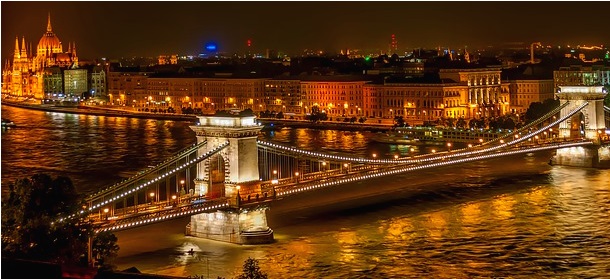
At night, lighting can make the bridge particularly photogenic, but illumination schedules may vary for energy policy, events or maintenance. Do not make a paid booking based solely on an assumed lighting display. A daytime visit is equally worthwhile for understanding the location.
A simple walking route across the Danube
Start in central Pest around the riverfront. Walk to the eastern bridgehead, cross on a pavement and pause on the Buda side. From there choose between the riverside and the hill. The Castle Hill route can include the palace precinct, nearby streets and viewpoints. If you prefer a less strenuous plan, explore the embankment, then return across the bridge or use public transport.
On a longer day, combine the bridge with the Parliament area to the north. The Shoes on the Danube Bank memorial lies along that riverfront. Treat the memorial respectfully and allow time for its historical context. Avoid packing every river sight into an unrealistic hour; distances add up.
For an alternative river perspective, a sightseeing boat can pass the bridge and other landmarks. Routes, boarding locations and evening schedules differ by operator. Some departures are simple cruises, others include food or commentary. Check inclusions and cancellation terms rather than assuming all “Danube cruises” offer the same experience.
Budapest tours and Danube cruises
A river cruise or guided city walk can add context to the bridge and nearby landmarks. Compare departure points, duration and the language of any commentary.
Getting to the bridge
From much of central Pest, walking is simplest. The bridge sits between the city centre and the Castle Hill approach. Use the official BKK route planner for the nearest current bus, tram or metro connection from your starting point. A particular bus number may be altered temporarily, and a nearby metro stop is not the same as a stop directly on the bridge.
If you arrive at a Budapest metro station, check the walking distance and the side of the river. The Pest end is a good starting point for visitors based downtown; the Buda end works well after a Castle Quarter visit. Taxis have different roadway permission from ordinary private cars, but a driver may still need to use a specific approach depending on traffic conditions.
There is no ticket booth for walking over the Chain Bridge. If someone sells a “bridge entrance ticket”, check what activity is actually being offered: it may be a tour or cruise, not admission to the public pavement. For current official traffic information, see BKK’s decision on the traffic arrangement and its live service notices.
Frequently asked questions
Is the Chain Bridge open to pedestrians?
Yes, its pavements reopened after the renovation in August 2023. Exceptional event or maintenance closures can occur, so check notices if crossing it is crucial to your itinerary.
When did the bridge open?
The original bridge opened in 1849. It was rebuilt after Second World War destruction and reopened in 1949. The most recent major renovation concluded in 2023.
When were Buda and Pest united?
The formal unification of Buda, Pest and Óbuda took place in 1873. The bridge predates this union and helped connect the two sides physically.
Is it worth visiting without a tour?
Yes. The public walk is free and gives strong views in both directions. A tour is useful if you want historical commentary or a wider route. Our Budapest sights overview helps place the bridge among the city’s other attractions.